
Brevard County Housing Market Update: Mid-Year 2026
We are officially halfway through 2026, making this the perfect time to take a step back and see how the Brevard County real estate market is really performing compared to last year.
Are home sales continuing the slowdown we’ve seen over the past four years? Is inventory really reaching record levels like some of the headlines suggest? What’s happening with home prices? And are distressed properties starting to make a comeback?
Let’s dive into the numbers and see what has actually happened in the Space Coast housing market during the first half of 2026.
Is the Space Coast Housing Market Headed for a Crash?
Before we jump into the data, I’d love to hear your thoughts.
Do you think the Brevard County housing market is headed for a crash, a major correction, or are we simply returning to a more balanced market?
Let’s see what the numbers tell us.
Inventory Is Lower Than Last Year
You’ve probably seen the headlines saying Florida leads the nation in homes for sale.
While that’s technically true, statewide statistics don’t always reflect what’s happening here on the Space Coast.
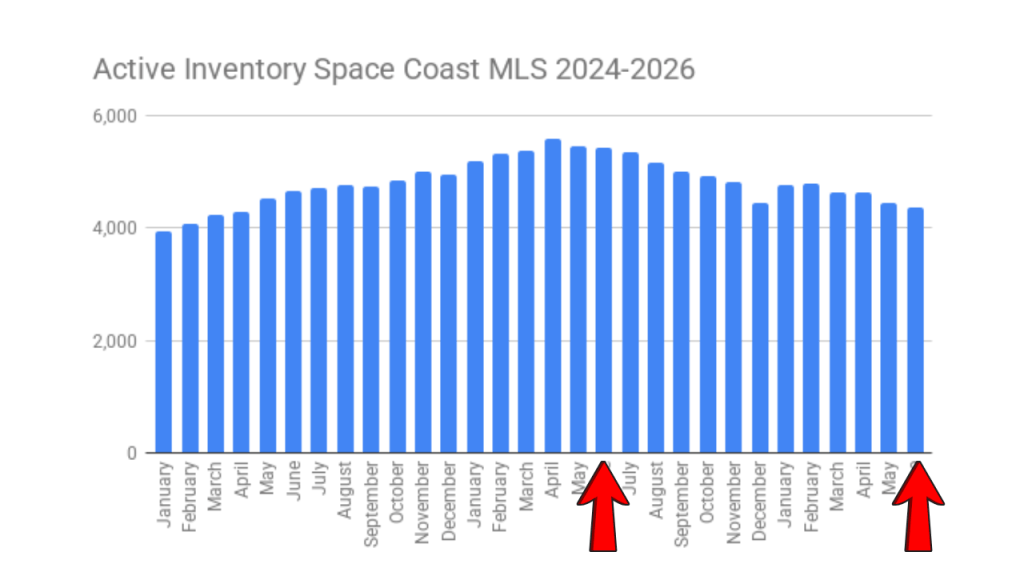
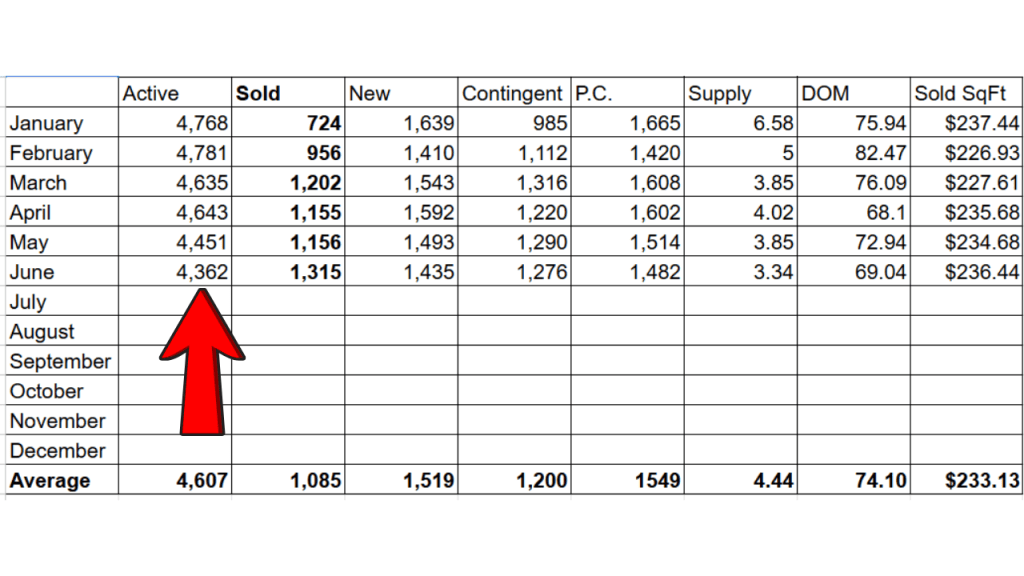
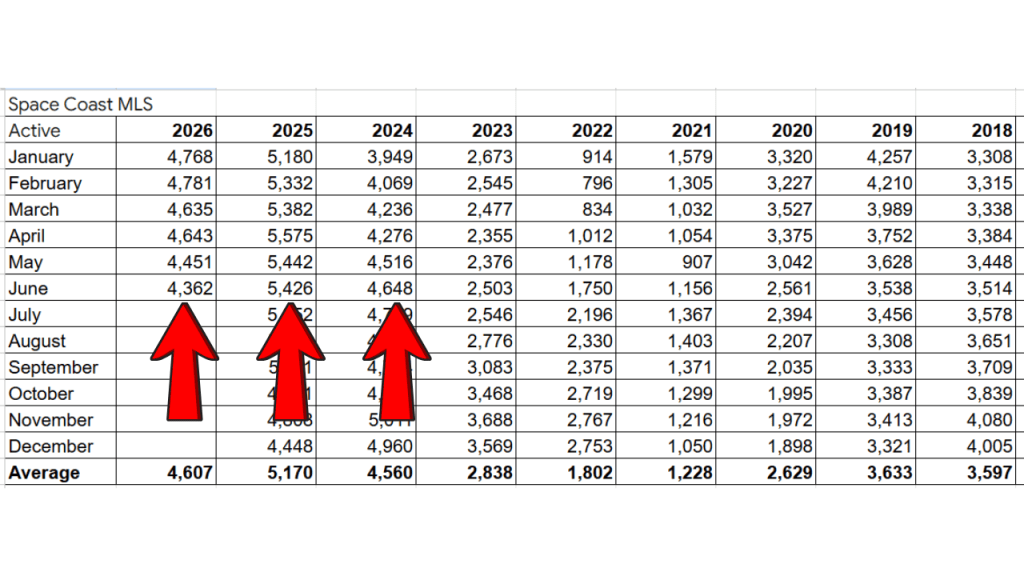
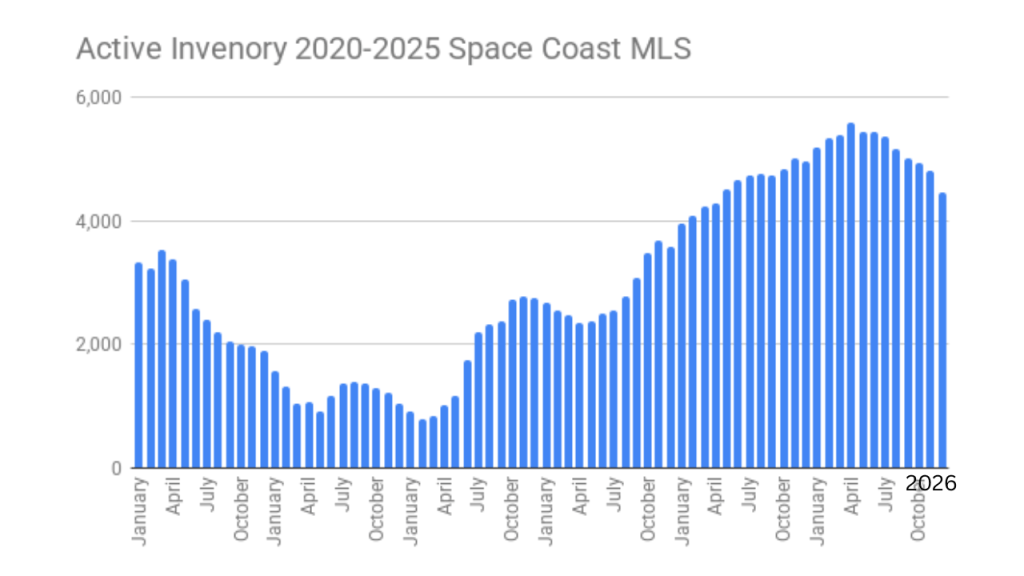
As of the end of June, Brevard County had 4,362 active residential listings.
That’s still far more inventory than buyers had during the pandemic frenzy, but here’s the surprising part:
Inventory is actually down nearly 20% compared to June 2025 and is also lower than where it stood in June 2024.
Before sellers get too excited, let’s keep things in perspective. Compared to the historically low inventory levels of 2021 and 2022, today’s inventory remains significantly higher.
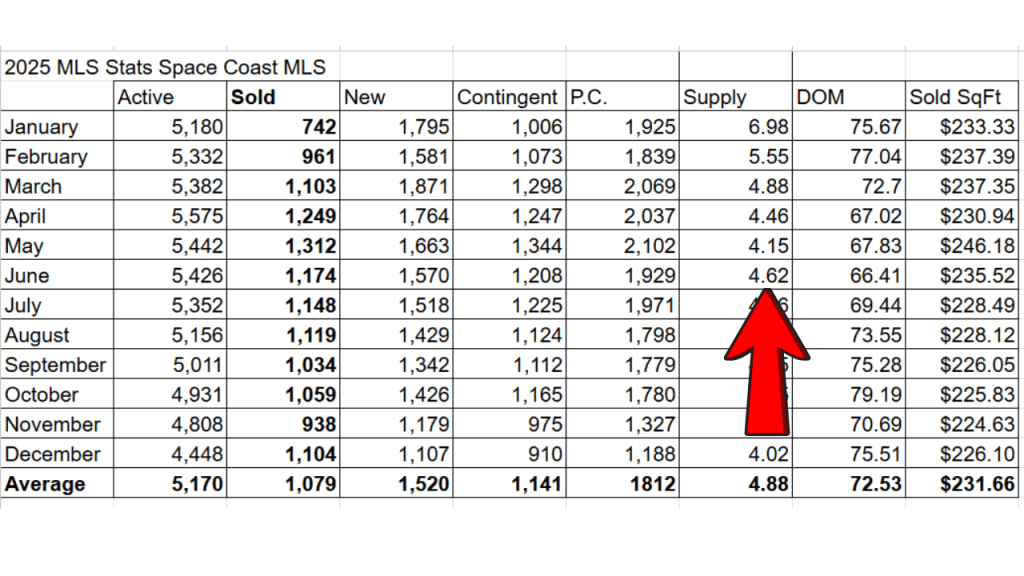
Months of Supply Continues to Improve
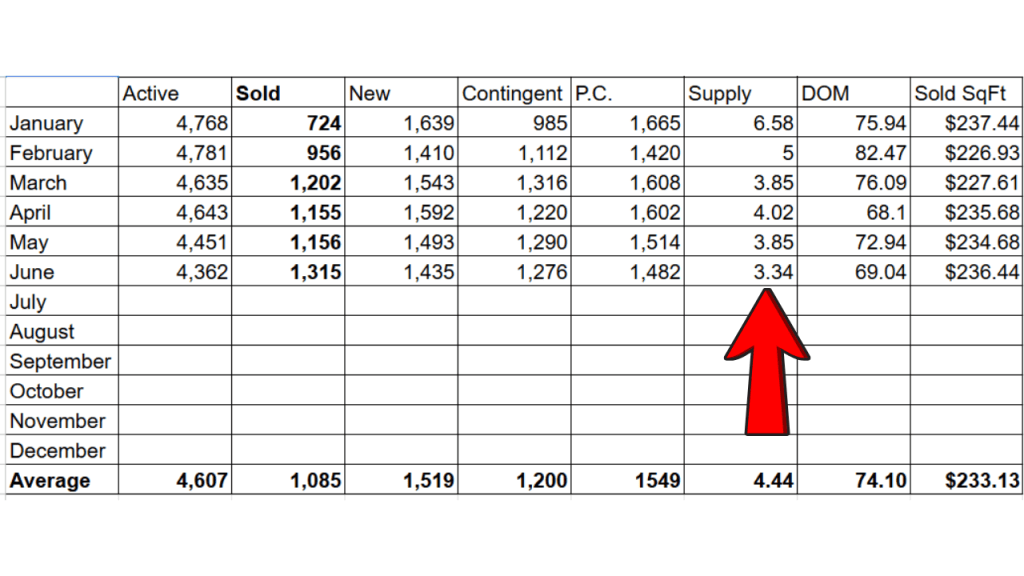
Another way to measure inventory is by looking at months of supply, which estimates how long it would take to sell every home currently on the market if no new listings were added.
- First Half of 2025: 5.2 months
- First Half of 2026: 4.6 months
While inventory remains elevated compared to the pandemic years, market conditions have actually improved somewhat compared to last year.
Home Sales Remain Slightly Lower
So, if inventory is lower, have buyers returned in force?
Not exactly.
The market isn’t booming, but it isn’t crashing either. Instead, it appears to be moving toward a more balanced market.
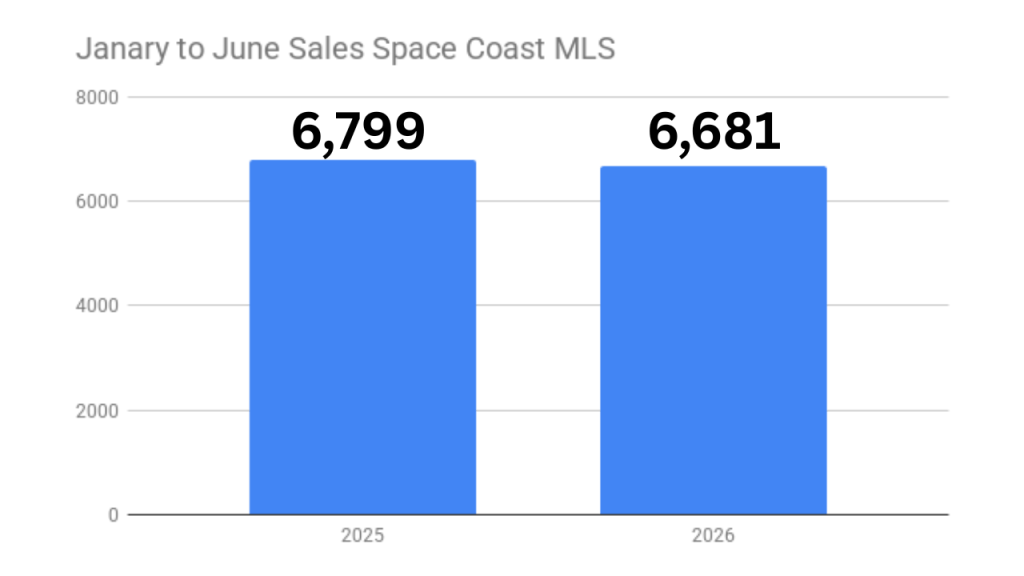
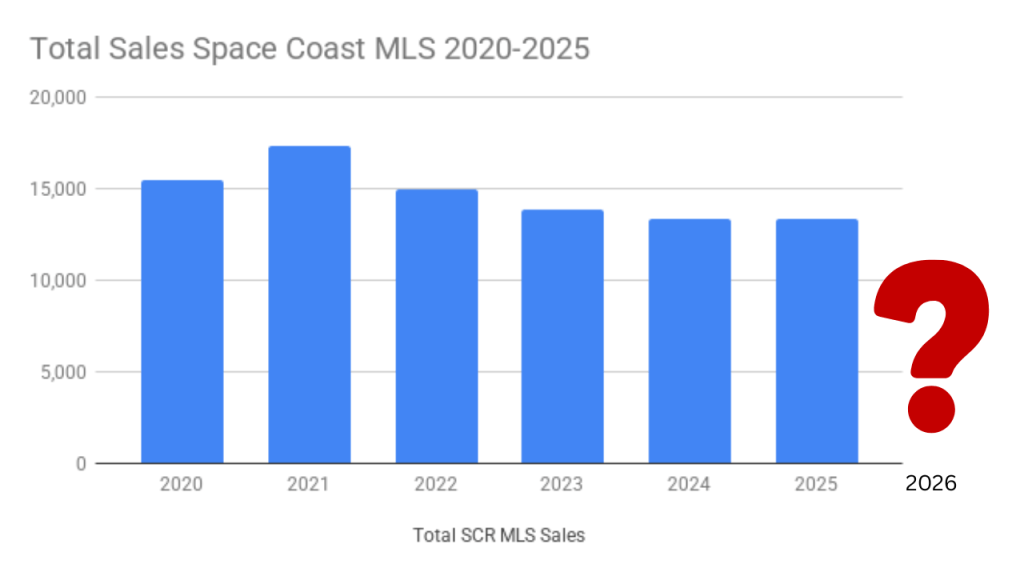
If you’ve followed my previous market updates, you know that home sales have been declining since reaching their peak in 2021. We started seeing signs of improvement toward the end of last year and hoped that trend would continue.
Unfortunately, we’re not quite there yet.
During the first half of 2026, home sales remained less than 2% below the same period in 2025.
Is that a decline?
Yes.
Is it a major decline?
Not really.
Homes Are Taking Slightly Longer to Sell
Homes are taking a little longer to sell, but nothing dramatic.
Average days on market increased from 71 days during the first half of 2025 to 74 days during the first half of 2026.
That’s a modest increase, not a major shift.
It’s also worth noting that nearly one out of every five homes still sold within seven days, proving that properly priced homes continue to attract buyers quickly.
Buyers Have More Negotiating Power
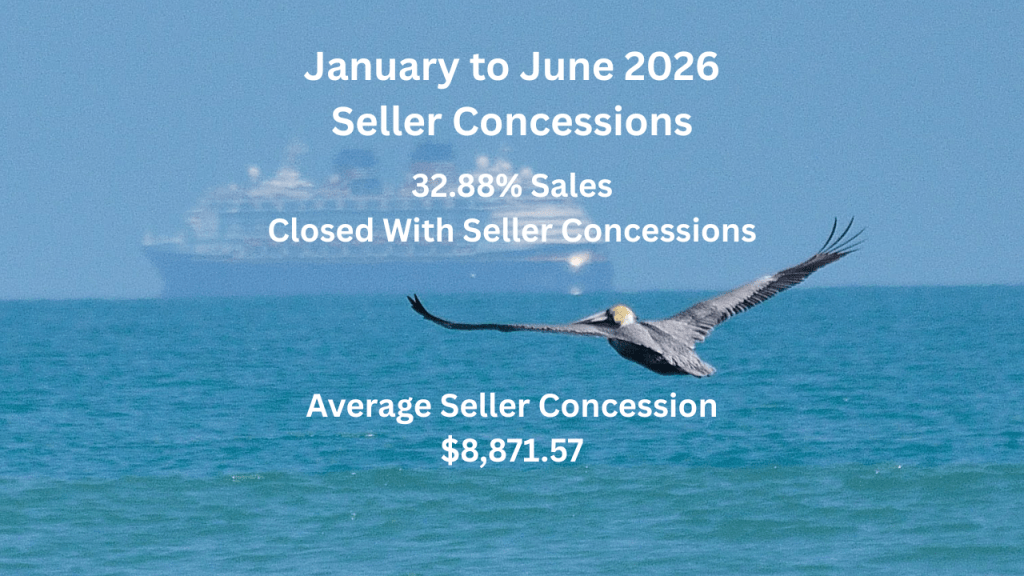
One noticeable change has been the increase in seller concessions.
During the first half of 2026:
- Approximately one-third of all closings included seller concessions.
- The average concession was nearly $8,900.
For buyers, this creates opportunities to reduce out-of-pocket costs through closing cost assistance, rate buydowns, or other negotiated incentives.
What About Home Prices?
With elevated inventory, relatively flat sales, and buyers gaining more negotiating power, you might expect home prices to be falling significantly.
That simply hasn’t happened.
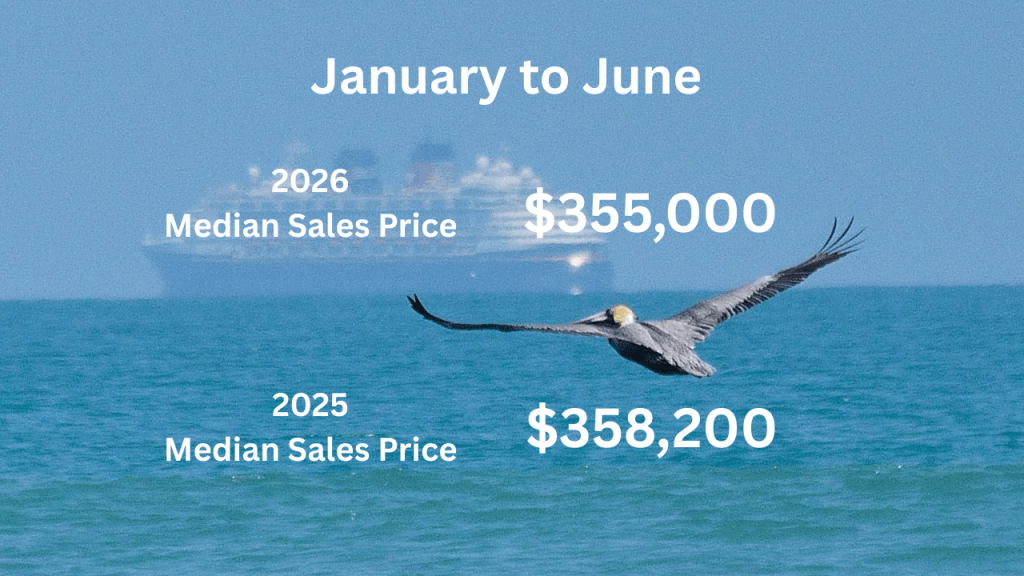
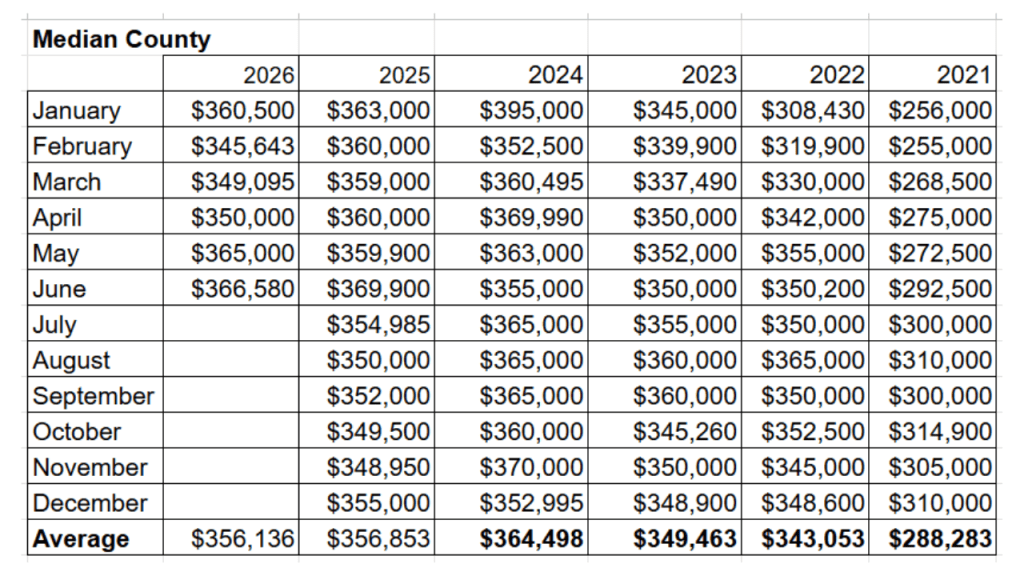
The median sale price during the first half of 2026 was $355,000, compared to $358,200 during the same period last year.
That’s a decline of less than 1%.
Are prices down?
Yes.
Is this a major correction?
Not really.
Instead, we’re seeing a housing market that is stabilizing.
Prices are no longer experiencing the rapid appreciation we saw during the pandemic years, but they’re also showing no signs of a major collapse.
For sellers, realistic pricing has become increasingly important, but well-priced homes continue to sell.
Are Distressed Sales Making a Comeback?
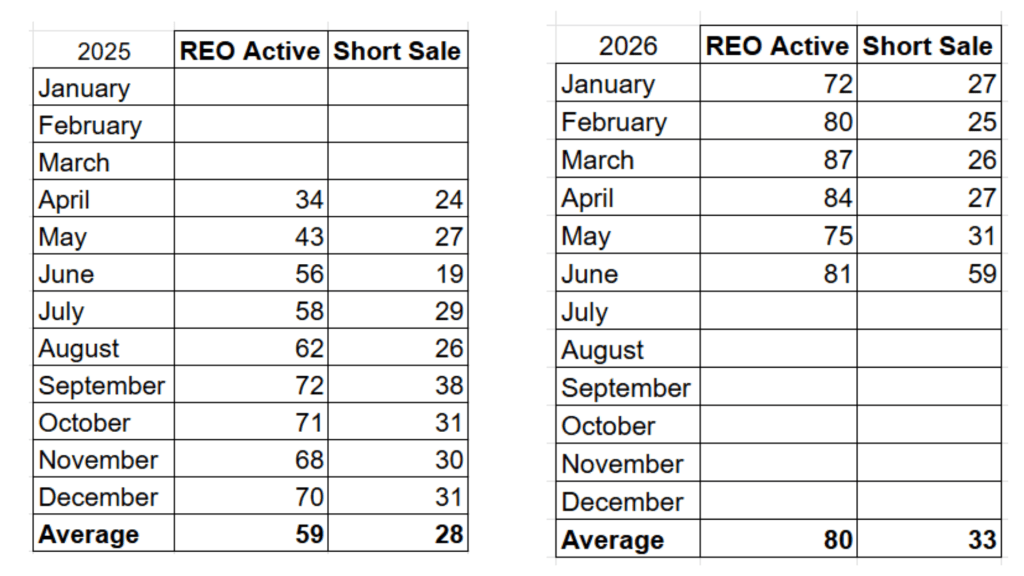
Whenever prices soften, one of the first questions I receive is whether foreclosures and short sales are returning.
The short answer is yes—but context matters.
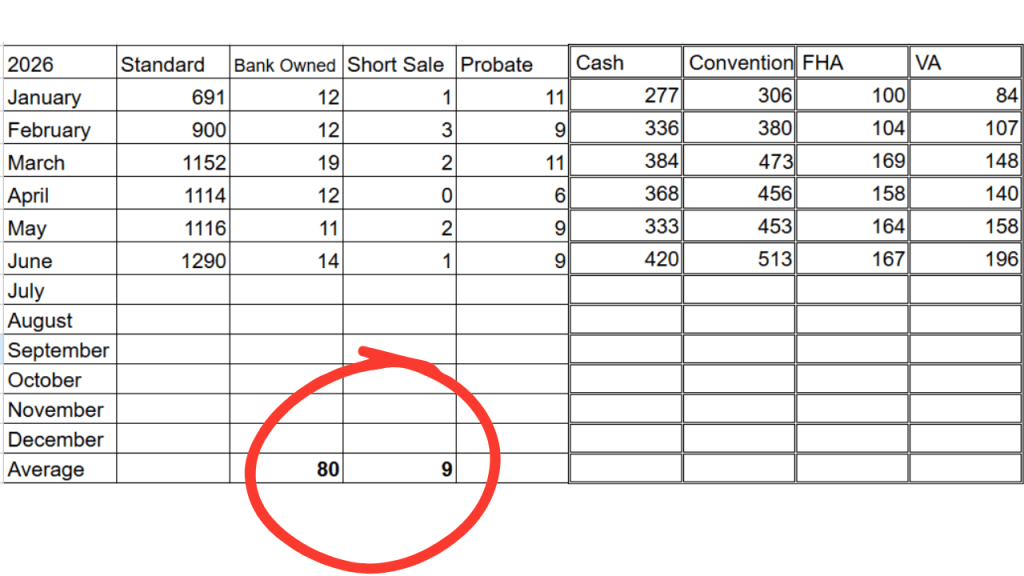
Percentage-wise, distressed sales have increased from the extremely low levels of the past few years.
However, the actual numbers remain incredibly small.
During the first half of 2026:
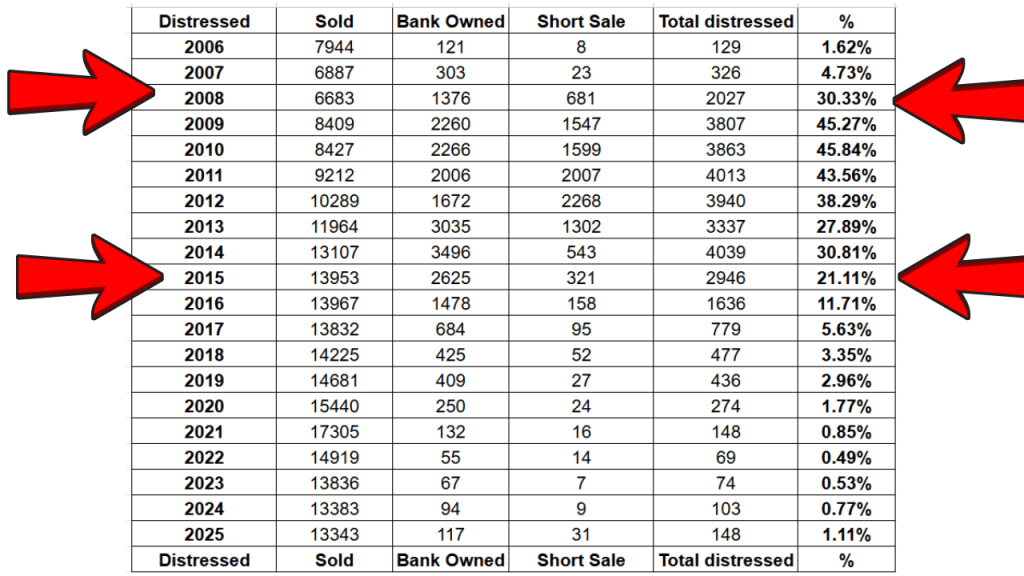
- Distressed sales represented about 1% of all closings.
- Fewer than 100 distressed properties sold out of nearly 6,700 total residential sales.
For comparison, during the Great Financial Crisis nearly half of all home sales in Brevard County were distressed properties.
In 2010, distressed sales peaked at nearly 46% of the market.
Today’s market sits at approximately 1%.
While headlines often focus on percentage increases, the underlying data tells a much different story.
What Does This Mean for Buyers and Sellers?
The first half of 2026 points toward a housing market that continues to normalize.
Buyers have:
- More inventory to choose from
- More negotiating power
- More time to make decisions
Sellers can still achieve strong prices, but proper pricing and realistic expectations have become increasingly important.
Should You Buy or Sell Right Now?
This is probably the question I get asked most often.
My answer today is the same as it was during the pandemic, last year, and even during the Great Recession:
It depends on what’s right for you.
Real estate is personal.
Your decision should be based on your financial situation, your goals, your timeline, and your reason for moving—not on trying to perfectly time the market.
History has shown that timing the market is extremely difficult.
Making the right decision for your specific circumstances is usually far more important.
Final Thoughts
As always, real estate is hyper-local.
Conditions can vary dramatically depending on the neighborhood, property type, and price point.
If you’d like to discuss your specific situation or have questions about the Brevard County housing market, feel free to reach out.
I’d be happy to help.


Eric Larkin is a Broker Associate with Real Broker, LLC. He lives, works, and plays in the Cocoa Beach area. If you have questions about moving or relocating to Cocoa Beach and the Space Coast, let me know! I get calls, texts, direct messages & comments on my posts every day about the real estate market and things that are happening in Cocoa Beach and the Space Coast that I love answering. Ask me your questions on moving, relocating here, or anything about the community. I am here to help. I have been helping buyers and sellers with their real estate needs since becoming a real estate agent in 2003. My focus is always on helping, answering your questions, and doing everything possible to make certain you have a smooth transaction from beginning to end.
Planning a move or have questions about our area? Eric Larkin with Real Broker, LLC can help! Schedule a call here https://www.ericlarkin.com/schedule-a-call
OR leave your info here and I will call you https://www.ericlarkin.com/contact-form

